
Heat pump hot water maintenance is one of the most underrated factors when people are considering purchasing a unit.
When purchasing a heat pump hot water unit, we outline 4 factors to consider in our guide on How to choose a heat pump hot water unit:
- Cost
- Reliability
- Refrigerant, and
- Maintenance
I think maintenance is often overlooked. Purchasers focus on the cost now, but discount the ongoing requirements and costs of maintaining their unit.
Below, we set out the general heat pump hot water maintenance requirements, as well as looking at some specific manufacturer requirements.
General Heat Pump Hot Water Maintenance
Most heat pump hot water systems require basic ongoing maintenance. Homeowners can often carry out some simple checks themselves, while scheduled services may be recommended every five years or so.
The general maintenance requirements are:
Keep ventilation areas clear – heat pumps work by extracting heat from the surrounding air. For a system to operate efficiently, airflow around the unit must remain unobstructed. Leaves, dirt, cobwebs, garden growth and stored items should be kept away from the air intake and discharge areas. Restricted airflow can reduce efficiency, increase running costs and place unnecessary strain on the compressor.
Check drainage – heat pumps produce condensation during operation, both from the condensate drain and the PTR drain. This water must drain away correctly. We should periodically check that the condensate drain is clear and water is draining freely. Owners should check this while the unit is operating (that is, making a noise). The unit should not drain or leak while it is not working. In severe cases, blocked drains can cause the unit to malfunction and stop working.
Flush the tank – over time, sediment and mineral build-up can accumulate inside the tank, particularly in areas with harder water. Many manufacturers recommend flushing the tank approximately every five years as part of a major service. This helps remove sediment build-up, maintain heating efficiency, improve water quality and ultimately extend the life of the system. Some systems may require more frequent flushes depending on water quality and the tank protection method used (see more below about sacrificial anodes).
PTR Valve Maintenance
One of the most-forgotten maintenance tasks on any hot water system is operating the PTR valve.
The PTR valve (Pressure & Temperature Relief valve) is designed to release pressure if the system experiences excessive temperatures or pressure.
Homeowners are generally advised to operate the PTR valve every six months. Regular operation helps prevent pressure build-up and ensures the valve is functioning correctly. If pressure cannot be relieved properly, it can place significant stress on the tank.
Operating the PTR valve is easy:
- Carefully lift the PTR valve lever for a few seconds
- Allow water to discharge through the drain line
- Release the lever and ensure the valve resets correctly
Most manufacturers allow homeowners to perform this maintenance themselves, while others require a licensed plumber or service technician (more on this below). Owners should always follow the manufacturer’s instructions and safety recommendations, including standing back from the PTR drain to ensure they aren’t splashed with hot water.
Understanding Tank Protection
All hot water systems need to be protected from corrosion. Over time, a unit will rust and the tank will crack if it is not protected.
There are three main ways a tank is protected from corrosion.
- Sacrificial Anodes (eg: iStore, Emerald, Haier, Reclaim glass-lined tanks)
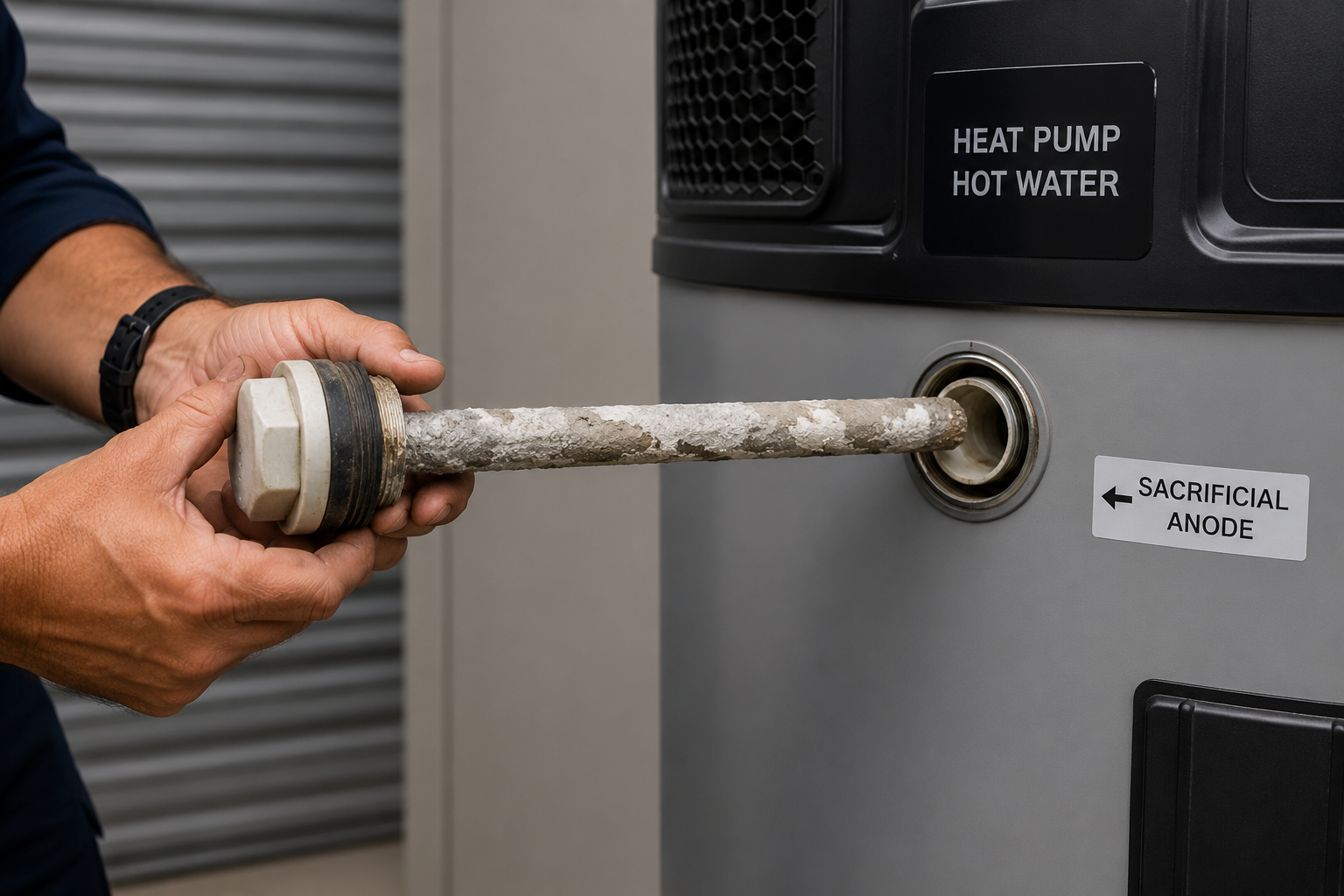
A sacrificial anode is a reactive metal rod designed to corrode (or “sacrifice” itself) instead of the tank. Over time, the anode gradually degrades and must eventually be replaced. We need to periodically check that the anode is still there, performing as it is supposed to.
Many glass-lined tanks use a sacrificial anode.
While sacrificial anodes work well, they come with increased maintenance. The anode needs to be checked and manufacturers almost always require this to be done by a plumber. This leads to increased ongoing maintenance costs.
A good example of maintenance and sacrificial anodes is Reclaim tanks. Reclaim tanks come in glass-lined (with a sacrificial anode), or stainless steel. The stainless steel tanks are around $1,000 more, but in my view, are a better long-term choice. Reclaim requires owners to check the anode of glass-lined tanks after the first five years and then every three years thereafter. While initially cheaper, this will likely work out to be more expensive over the life of the unit (not to mention that hassle of having to remember and organise the additional services).
- Impressed Current Anodes (eg: Aquatech)
Some systems use an impressed current anode which use a small electrical current to protect the tank from corrosion.
Impressed current systems are often considered a more advanced solution compared to traditional sacrificial anodes and require less maintenance (and less ongoing costs!)
The impressed current anode used by the Aquatech Rapid X6 and Aquatech Dynamic X8 are one of the reasons we think these units are the best value on the market. Not only do the Aquatech units come at a lower upfront cost, but they also require less maintenance, which will lead to lower ongoing costs.
- Stainless Steel Tanks (eg: Reclaim)
Stainless steel tanks provide corrosion resistance through the tank material itself – stainless steel doesn’t rust.
Because they do not rely on sacrificial anodes, they generally require very little ongoing tank maintenance.
Premium stainless steel systems are often regarded as some of the lowest-maintenance heat pump options available.
Maintenance Should Be Considered Before You Buy
When comparing heat pump hot water systems, many people focus only on the upfront purchase price. However, long-term maintenance requirements can significantly impact lifetime performance and the true cost of ownership.
A cheaper system at the beginning may ultimately cost more over time if it requires more maintenance: more frequent visits from a plumber will cost more, as well as being a hassle to remember and co-ordinate. There’s also a risk of a warranty being voided if maintenance requirements are not met.
This is an important consideration that many buyers overlook.
Manufacturer Requirements
Some manufacturers allow owners to perform basic maintenance tasks themselves, such as operating the PTR valve.
Others may stipulate that maintenance must be completed by a licensed trade professional to maintain warranty coverage.
For example, some models from Emerald technically require maintenance to be performed by a licensed professional. In practice, this may mean arranging and paying for a plumber every six months simply to operate the PTR valve.
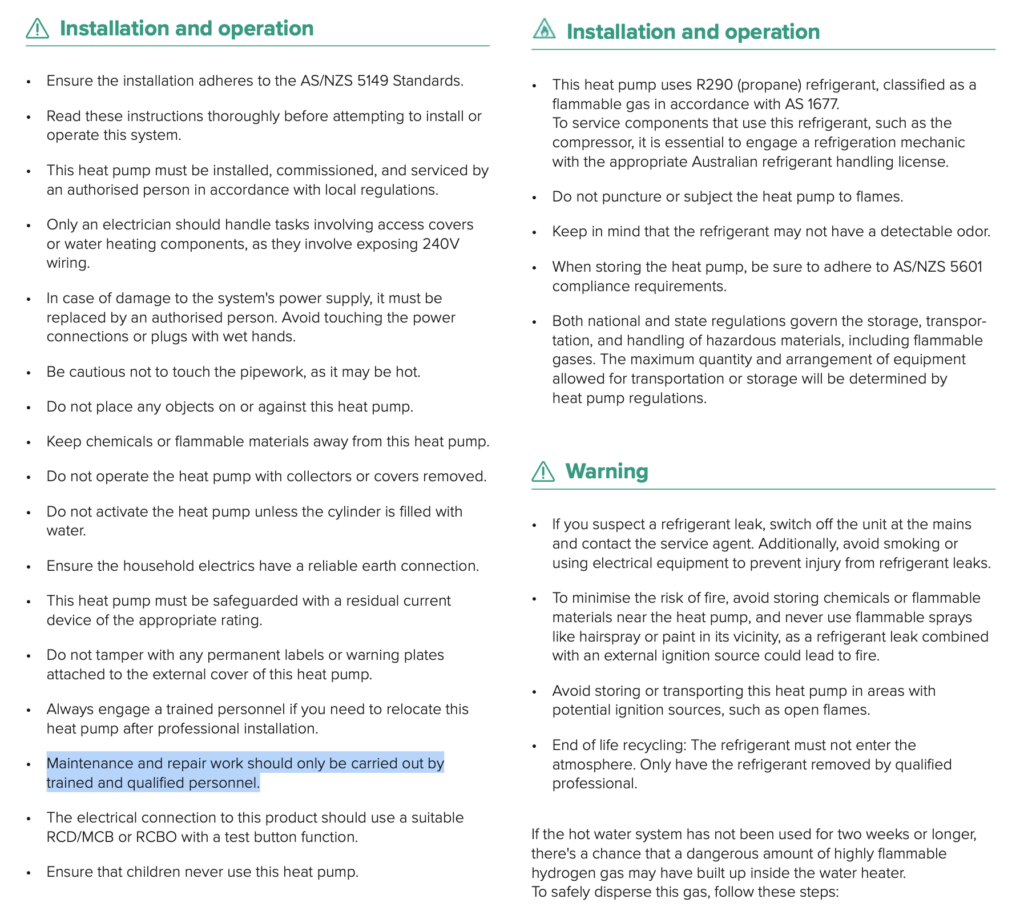
If these requirements are not followed, there is a potential risk of warranty disputes or reduced warranty coverage.
Summary
Good quality heat pump hot water units require very little maintenance.
We should periodically:
- ensure airflow is clear and unobstructed
- check drains are working properly
- operate the PTR valve every six months
- service the unit every five years (or however often is required by the manufacturer)
I think Aquatech units stand out as good-quality, affordable units that are reliable and have low maintenance requirements, mostly due to using an impressed current anode instead of a sacrificial anode. Haier and iStore, also good quality mid-market units, are great, but use a sacrificial anode and therefore have increased maintenance requirements.
Top-quality systems such as those from Reclaim Energy, which use stainless steel tanks, are widely regarded as some of the lowest-maintenance heat pump hot water systems available, but come with a price tag.
When choosing a heat pump hot water system, it’s important to consider not just the upfront price, but also the long-term maintenance obligations, servicing costs, and warranty requirements that will apply throughout the life of the unit. Hopefully that unit will last a long time!


 Subscribe to Our