
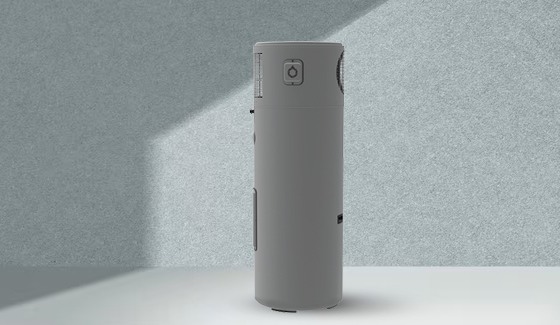
Heat pump hot water units are the most efficient, cheapest, smartest and most environmentally friendly way to heat water for your home.
But it’s not easy to choose a unit. There are heaps of units on the market and it can be confusing.
We’ve developed a framework of four factors to look at when choosing a heat pump hot water unit. The four key factors are:
- Cost
- Reliability
- Refrigerant
- Maintenance
Throughout this article and video, I clearly explain how to choose a heat pump hot water unit. By the end, you’ll be well equipped to make an informed choice, and also understand why we recommend certain brands.
—
A quick note before we start: Powrhouse is independent. While you’ll see that I currently only recommend one or two products, I am not affiliated with those products. We have a very clear mission at Powrhouse which is to make it easy for people looking to install a hot water heat pump – we only deal in the best brands, we provide the best advice and we will not be beaten on price.
—
Main Factors for Choosing Heat Pump Hot Water
Our framework for analysing heat pump hot water unit brands includes four main factors: cost, reliability, refrigerant and maintenance.
Before we go through each of these below, I should explain minor factors: noise, heat, geography and where the units are made. These are minor factors as they’re mostly no longer an issue. Some older units developed a reputation for being noisy, not working in certain colder climates and not heating the water sufficiently. This really isn’t an issue anymore for good quality. There’s every chance these minor factors will still be an issue for cheaper, poor quality units. I prefer Australian made units, but this is not always possible and should be balanced against price.
Let’s dive in….🤿
1. Cost
Cost is easy to analyse – all else being equal, lower is better.
Good quality units range from $1,200 to $3,500 in the mid-market and upwards of $5,000 for premium units like a Reclaim.
Costs vary depending on the make and model of the unit you choose, your eligibility for rebates and the difficulty of your installation.
I think any units priced less than $1,000 start to feel cheap and nasty. We don’t want to compromise on reliability.
2. Reliability and Warranty
There are two approaches on how to choose a heat pump hot water unit: buy cheap and hope it lasts, or pay a bit extra and know that you are buying a good quality unit.
Our approach at Powrhouse is simple – buy a good quality unit which will last a long time, rather than try our luck with a poor quality unit.
But how do you work out whether a unit is good quality?
Our views on reliability are informed by a few sources.
First we look at reviews and online forums. A multitude of reviews are very helpful in working out whether a unit is likely to perform well. If it has performed well for a number of happy customers, it’s likely that you’ll have the same experience. I also place greater value on reviews of units that have been operating for a long time. It’s one thing to read a review of a unit installed 3 months ago, but it’s more valuable to read a review of a unit that has been operating for 5 plus years. I like Product Review and the Facebook Group My Electric Efficient Home.
Second, we look at the warranty offered on the unit. We interpret a product’s warranty as a sign of faith the company has in its product. We also need to assess the strength of the company offering the warranty.
Which leads us to our last point: the manufacturer and its track record. We have greater faith in units sold by manufacturers that have been around for a long time with an established track record. A proven track record suggests they’ve had happy customers that have sustained their business. A track record also suggests the company will be around for a long time to come, to honour any potential warranty claims. This is particularly relevant at the time of writing (May 2026) as we’ve recently seen Smart Lifestyle Australia enter liquidation.
3. Refrigerants
The refrigerant in heat pumps is the gas/liquid that effectively transfers heat from the source (air) to the water. Refrigerants are used widely across industries but are especially relevant in air conditioning and heat pump hot water.
There used to be a wide variety of refrigerants used in the heat pump hot water market. Many cheap and cheerful companies used poor refrigerants which were terrible for the environment if they escaped.
Thankfully, the rebate agencies in Victoria have all ended the use of these refrigerants. Products are now only eligible for rebates if they use a refrigerant with a global warming potential less than 700.
Most heat pump manufacturers now use Propane (R-290) which has a GWP of around 3. So most heat pumps on the market now use the same refrigerant.
It is worth noting that the Rheem Ambiheat uses R-513a with a GWP of around 630. This is still classed as a low-GWP, but is significantly higher than propane and carbon dioxide.
4. Maintenance
We want to avoid heat pump hot water units that require onerous maintenance conditions, or lead to increased operating costs because we regularly need a plumber to service the units.
Maintenance largely comes down to the method used to protect the tank and the requirements put on owners.
Tanks are protected against corrosion by one of three ways: a stainless steel tank, an impressed current anode or a sacrificial anode.
Stainless steel tanks are great but can be expensive. Most units use a sacrificial anode which is a metal rod (usually magnesium) which is designed to sacrifice itself rather than the tank. The anode breaks down instead of the tank. These are effective but require maintenance – the anodes need to be checked and replaced. An impressed current anode is an electric current that runs around the tank to protect it.
Maintenance requirements shouldn’t be the driving factor in making a decision, but it pays to be aware of what’s required when comparing units.
Mapped – The Market for Heat Pump Hot Water Units
We have mapped every unit on the market so they can easily be compared.
Please click here to view the entire spreadsheet
Summary
I hope you have found this helpful. Whether you choose to go with Powrhouse or another provider, I hope this framework helps in selecting your next heat pump hot water unit.
The technology and market is developing at a rapid rate. Powrhouse will likely recommend and deal in other units, and we are certainly keeping an eye on market developments.
If you are interested in a quote for a heat pump hot water unit, or if you have any other questions, we’d be delighted to hear from you. Please feel free to contact us via our Contact Form.

 Subscribe to Our