
You’ve made the wise decision to buy and install a heat pump hot water unit.
Now – we need to set it up.
Heat pump hot water units are electrically powered. The electricity price varies throughout the day and many of us have solar which of course generates free electricity, so we need to give some thought to how we best set up the units.
Below is a comprehensive guide on how you should think about setting up your heat pump hot water unit. My recommendations are informed by a great deal of research on heat pump hot water units, as well as feedback from Powrhouse customers. I hope it’s helpful to collate this feedback into advice which will help you get the most out of your unit.
How the units work?
Let’s start by going over some basics of your heat pump hot water unit.
First, most units on the market work by heating the water up to 60 degrees. We install a tempering valve which mixes the hot water from the tank with cold water to drop it to 50 degrees. There are two plumbing standards in operation here. First, why heat to 60 if the water is delivered at 50? Answer: to kill off any chance of legionella, which breeds between 20 and 45 degrees. Second, it is an Australian standard to fit a tempering valve to reduce the temperature to 50 degrees to stop people from burning themselves. 50 degrees is still too hot to hold in your hand, so don’t worry, you’ll still have hot showers.
Fun fact: the most energy intensive part of the heating cycle is going from 55 to 60 degrees. It’s like a kettle boiling water from 95 to 100 degrees – the last few degrees always requires the most energy.
Temperature
The temperature displayed on the unit is taken at one single point in the tank. It is not a measure of the overall temperature of the tank as there is no such thing – the tank has water at different temperatures.
In the Aquatech Rapid X6, the sensor is positioned with 122L of water above and 90L below.
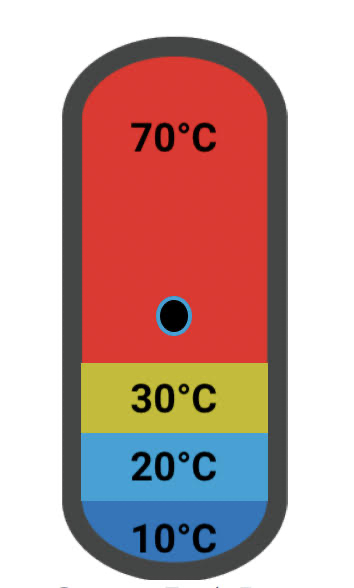
Short story: don’t worry too much about the temperature on the display. It’s only a guide. The real test is whether your shower is hot enough.
Operating modes
There are two modes to consider. Standard or Auto mode heats the water to 60 degrees and will reheat once it drops below 55 degrees. Eco mode is our holiday mode and drops the reheat trigger point to 48 degrees. This means the unit will cycle less, particularly when we go away and the water is only losing heat due to cold air (as opposed to being used).
I recommend changing to Eco mode if you go away for 2 days or more. If you only go away for the weekend, it’s arguably not worth the hassle (particularly if you have solar in which case your running cost is free anyway).
For the sake of completeness, it also helps to be aware of “Backup” or “Element” mode which will heat the water through the old-fashioned electric resistance element. This is very inefficient and can be expensive, but can be helpful when the heat pump fails and will still provide some hot water. Hopefully this won’t happen for a long time!
Timer
I strongly advocate setting a timer on your heat pump hot water unit. Whereas old gas units could be used at any time of the day (the price of gas does not change throughout the day), heat pump hot water units are electrically powered and we want to run them during what I call the “Optimal Heating Window.”
There are four factors which affect your Optimal Heating Window:
- Solar – if you have solar, we want to run the unit during the hours of solar generation to capitalise on our free electricity. This equally applies to people that don’t have solar, as I believe we all have a duty to use more electricity during the day, and less during the peak 4pm-8pm window. I explain this more in my YouTube video on “How electricity markets work.” Let’s say the perfect time for solar is between 9am and 5pm.
- Heat – heat pump hot water uses “heat pump” technology – capturing heat from a source (in this case the air), amplifying it and pumping it into the water. It makes more sense to run the unit when there is more heat in the air. Let’s say the perfect time for heat in the air is around 3pm.
- Noise – heat pump hot water units make more noise than old gas units. We want to avoid running the units at say 9pm onwards to avoid the possibility of any noise disturbance
- Peak tariffs – those of us on peak energy tariffs pay more for electricity from 3pm to 9pm, so we want to avoid running the unit during this period.
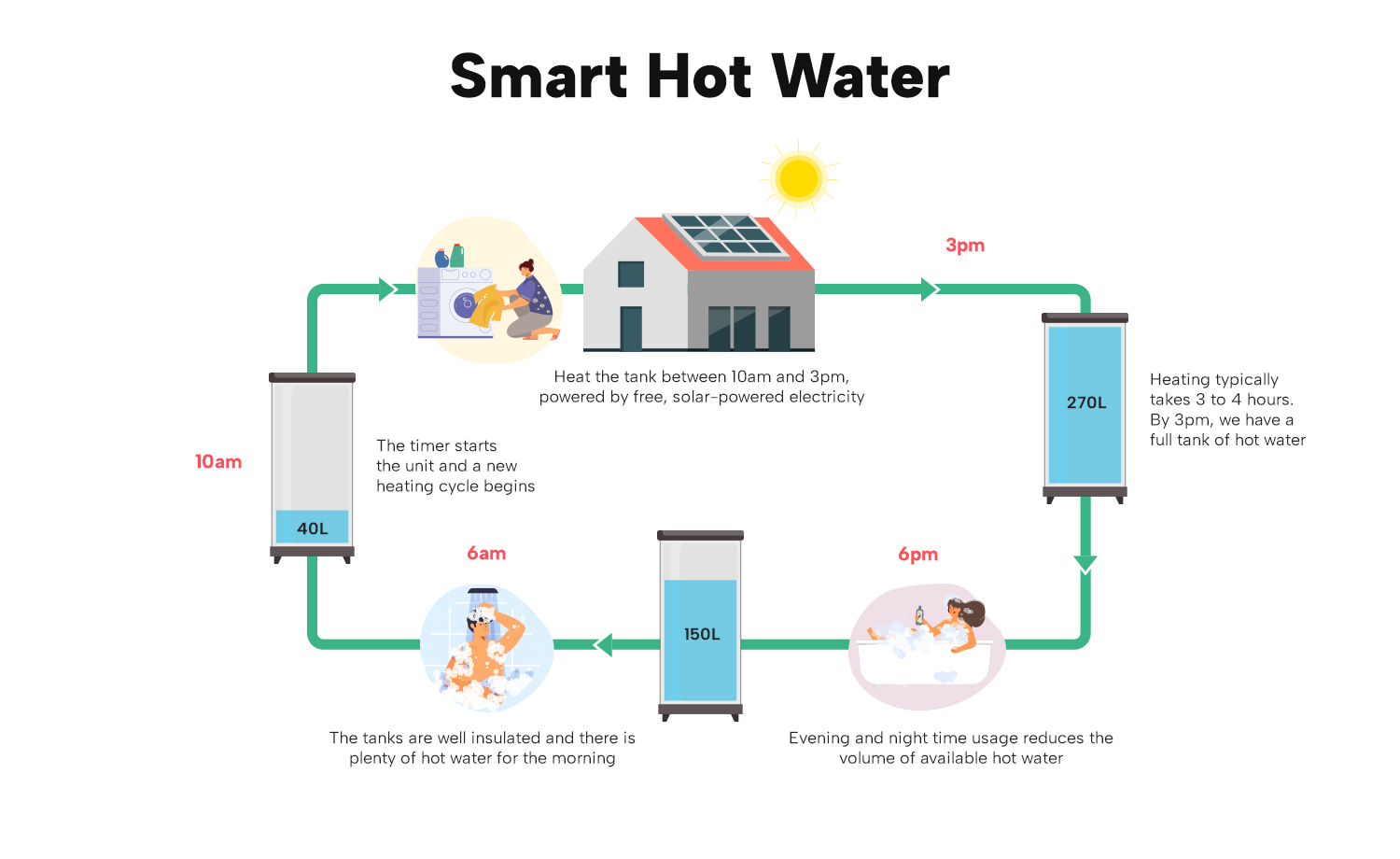
With all that said, I think the Optimal Heating Window is 10am to 3pm. I encourage everyone to start with a narrow timer and operate the units on one cycle per day.
One Cycle Per Day
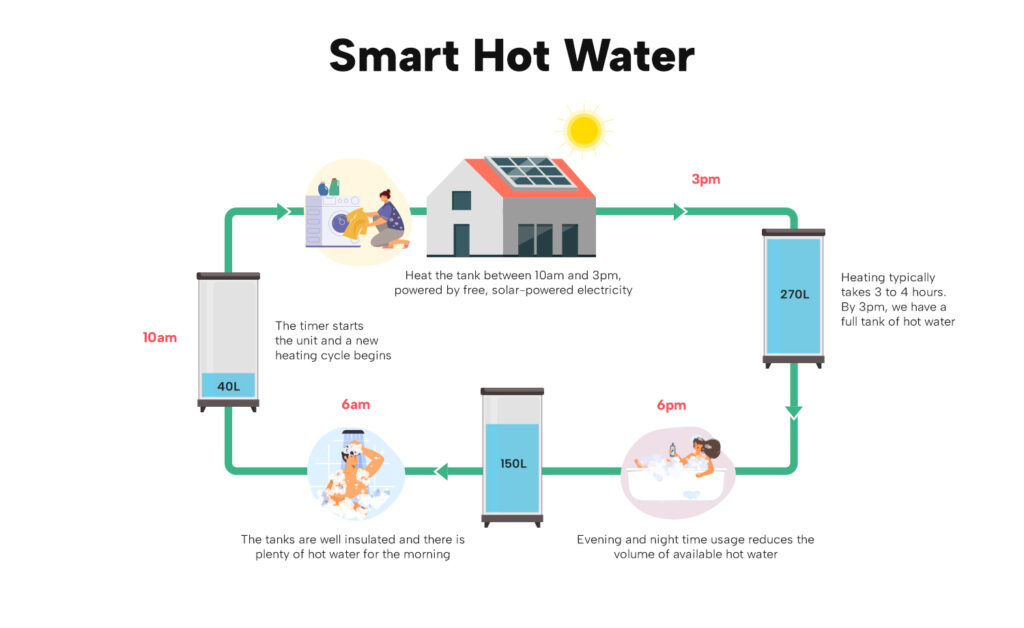
It’s optimal to run the units for one cycle per day. Let’s step through this cycle and at 3pm we have a full tank of hot water. The hot water will be used in the evening, we’ll lose a little heat in the unit overnight and there should still be enough hot water for the next morning’s usage. The timer will kick in again at 10am and go through its heating cycle.
The downside of this approach is there is a risk we run out of hot water. As the unit is not on a timer, if we use too much hot water outside of the timer window, the water won’t reheat. We’ll be out of hot water until the timer kicks in again the next day. You can of course manually override the timer, but heat pump hot water units take a while to heat up the water, so it will take a couple of hours before we have hot water again.
Plan B
You might like to set a timer between 11am and 3pm. I think that’s a good starting point.
But, if you’re not getting enough hot water, I’d follow these steps, in order:
- First, lengthen the timer, still keeping in mind the Optimal Heating Window. You might lengthen the timer from 10am to 4pm, and if that doesn’t give you enough, then go to 9am to 5pm.
- If that’s still not enough, I recommend considering a boost, say from 5am to 6:30am to make sure we have enough hot water for morning showers. We can think of this is a short boost to give us enough hot water for morning showers, but we’re still doing the bulk of the heating during the Optimal Heating Window.
- If that’s still not giving us enough, you could do a very long timer from 6am to 10pm. This will allow us to reheat any water used during the day.
Visitors and Seasons
If we have visitors come to stay, our hot water usage will increase. In many cases we won’t need to make any changes, but it might be worth keeping your timer settings in mind. You might want to lengthen the timer to give the unit more time to replenish and reheat hot water, and in some cases we might need to take the timer off altogether.
We should also keep in mind the changing of the seasons. As we go into the colder winter months, we might need to lengthen the timer and/or introduce a boost cycle. The unit will take longer to reheat and it will lose heat more quickly due to colder outside temperatures. We should keep in mind reversing any changes to settings as we come out of the cold winter weather into more temperate spring weather.
Summary
We hope you have found this article helpful. The key messages are setting up your unit to most run it most efficiently and don’t be afraid to play around with the settings. Indeed, don’t be afraid to run out of hot water a few times to test the boundaries. Setting up the unit to run efficiently will benefit you for many years to come.
If you are new to heat pump hot water, please feel free to get in touch through the contact us form and we’d be delighted to help recommend a good quality unit that is appropriately sized for your home.

 Subscribe to Our