
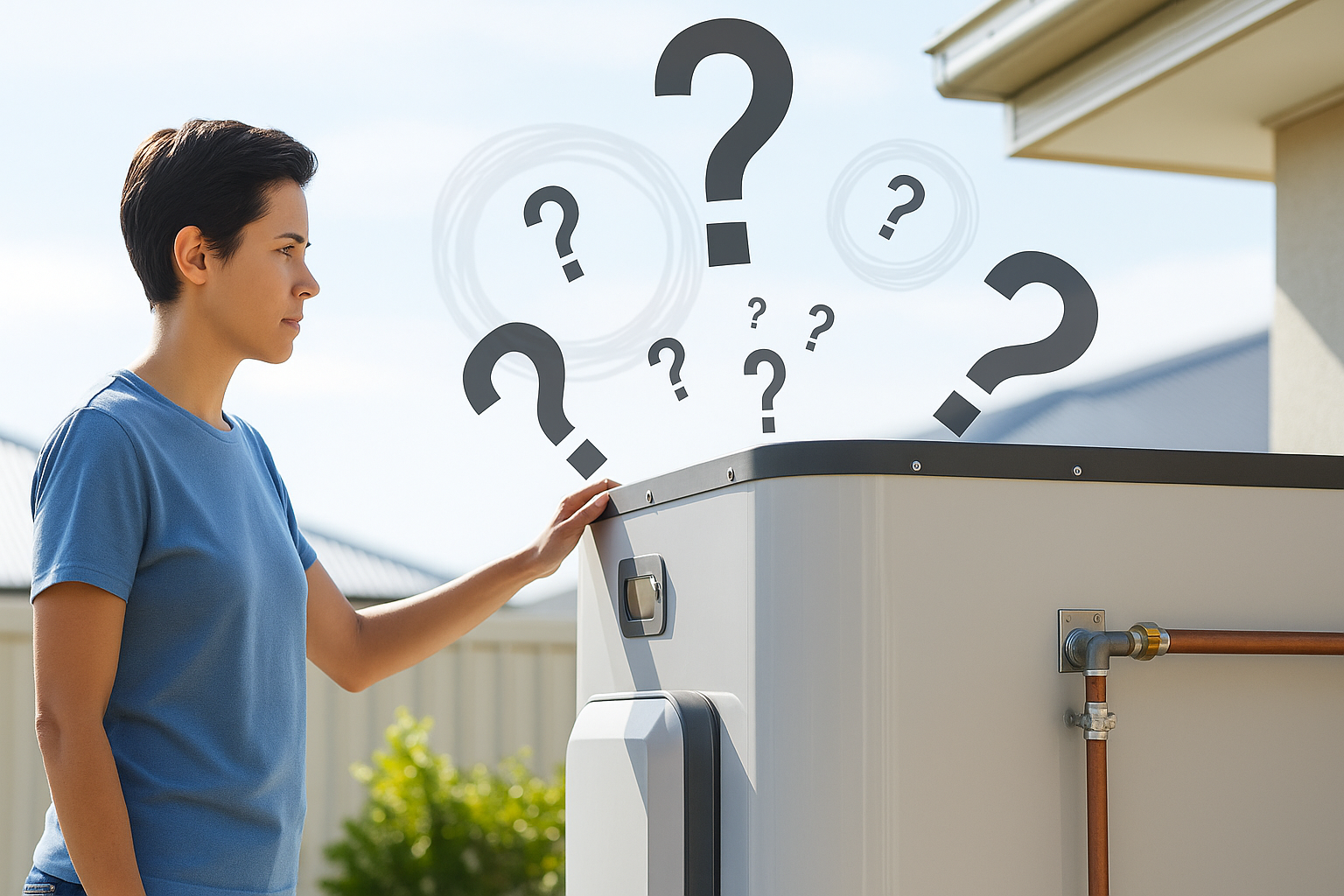
Heat pump hot water systems are quickly becoming the preferred choice for Victorian households. But with their rise in popularity comes plenty of misinformation. Whether it’s cost, noise, reliability, or performance, there are lots of myths floating around that can make people hesitant about making the switch.
Let’s cut through the noise (pun intended) and tackle the seven most common myths about heat pump hot water systems.
Myth 1: Heat pumps are expensive
It’s true that some top-end models can sell upwards of $7,000 installed. But that doesn’t mean all heat pumps come with such a hefty price tag. In fact, we install plenty of good quality mid-market units for as little as $1,000 to $2,000.
On top of that, heat pumps are much cheaper to run than traditional electric or gas systems. They typically use around 70-80% less energy, which means ongoing savings on your power bills. Not only are heat pumps much cheaper to run, but with helpful government rebates and incentives, the installation cost is often lower than a standard electric or gas hot water system.
While the “expensive” label sticks in people’s minds, the reality is that heat pumps can be one of the most affordable and cost-effective hot water solutions both now and in the long term.
Myth 2: Heat pump hot water units are loud
Many people picture a noisy outdoor unit humming away and disrupting their peace and quiet. In reality, heat pumps are far quieter than most people expect.
We’ve had customers stand directly in front of a Reclaim system and ask if it’s even running – they couldn’t hear it. Quality mid-market systems aren’t completely silent, their sound levels are similar to air conditioners. We encourage customers to run the units during the middle of the day, for multiple reasons, including to limit the possibility of any noise disturbance.
In practice, we’ve installed hundreds of units and the only noise complaint we’ve had is because one customer incorrectly programmed their unit to come on at 2am in the morning outside a bedroom window. We helped them fix their settings – problem fixed.
Myth 3: Heat pumps are troublesome
This myth often comes from old experiences – or from gas plumbers who simply don’t want to up-skill. Ten years ago, heat pumps were newer technology, and yes, some early models had teething problems.
But today’s heat pumps are much more reliable. Many now come with long warranties of 7 to 10 years, and you can reasonably expect a lifespan of 15 years or more. In fact, we’ve met customers who installed one of the very first models 16+ years ago, and they’re only now coming back to us to replace them – with another heat pump.
Like any appliance, quality matters. Choose a reputable brand, have it installed correctly, and a modern heat pump is no more troublesome than a gas or electric system.
Myth 4: Heat pumps don’t work when the power goes out
While it’s true that heat pumps need electricity to operate, they store hot water in a tank just like traditional systems. Unless the power goes out right after you’ve drained your tank, you’ll still have hours or even longer of hot water stored and ready to go.
In fact, most households won’t even notice a difference during a short power outage. And it’s worth remembering: instant gas hot water units also rely on electricity for ignition. If the power is out, they won’t work.
Myth 5: Heat pump hot water units don’t heat water as well as gas
Another common myth-conception is that heat pumps don’t heat the water as well as gas. This simply isn’t true.
Heat pumps heat water to 60°C and in some cases up to 70°C. That’s more than enough for showers, washing, and all your daily needs.
The main difference is speed. Gas systems reheat water at around 4L per minute, while heat pumps take a little longer (around 1-2L per minute). But for a properly sized tank, this isn’t an issue – you’ll always have plenty of hot water ready to go.
Myth 6: Heat pumps are big and take up too much space
Here’s one myth with a bit of truth to it. Heat pumps are large and not always practical to install.
This is particularly true when replacing an instant gas unit. Instant gas units are quite small and usually installed on the walls of houses. Replacing them with a heat pump might block pathways and access.
In these cases we try to look at alternatives – can we install the unit in a different location? Unfortunately, sometimes we recommend customers don’t install a heat pump because it’s not practical. In those cases, hopefully a traditional or instant electric hot water system will be available to help the customer get off gas.
Myth 7: Heat pumps don’t work in cold weather
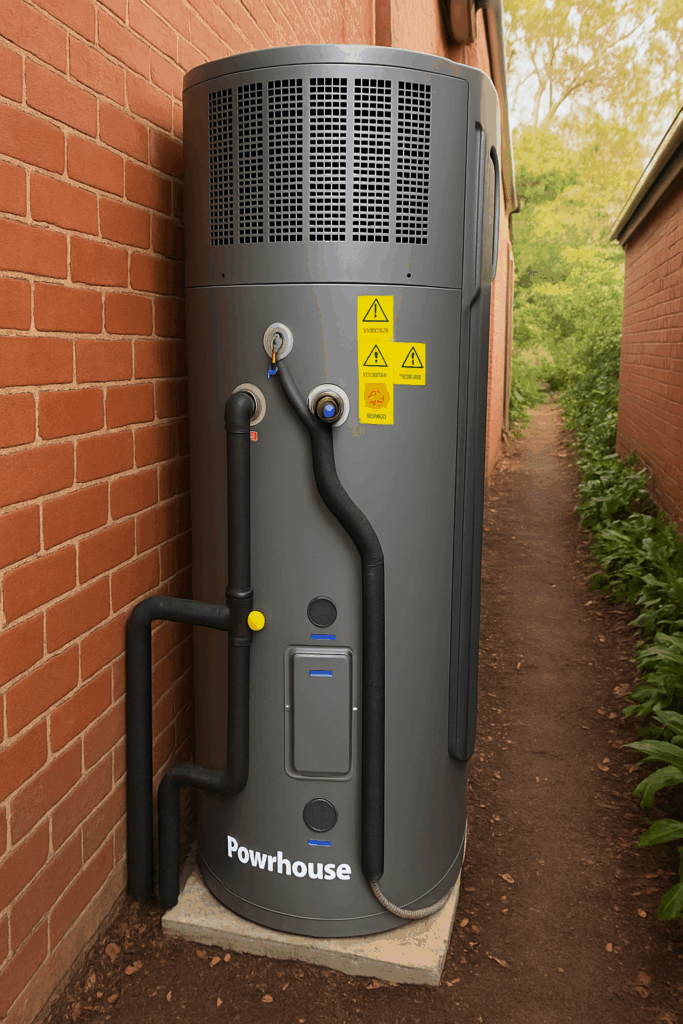
Heat pumps work by absorbing heat from the air, amplifying it and transferring the heat into the water. They work more efficiently when there is more heat in the air. When there is less heat in the air, they need to work harder. But we need to remember our temperature scales. Just because it’s zero degrees outside, doesn’t mean there is no heat in the air. The point at which there is no heat in the air is -273 degrees celsius, or zero kelvin. So whilst it’s cold at zero degrees Celsius, there is still heat in the air and the unit will still work.
The other key point is we want to run our heat pump during the middle of the day, for exactly this reason: there is more heat in the air and the unit will work more efficiently (as well as optimising our solar). While some parts of Melbourne and Victoria can get very cold, especially overnight, heat pumps will have no problems running during the middle of the day.
Final Thoughts
Heat pumps have come a long way over the past decade. They’re not only more efficient and environmentally friendly, but also more reliable and cost-effective than many people realise.
While myths about cost, noise, reliability, or performance might make some households hesitate, the reality is that modern heat pumps are a fantastic choice for most Australian homes. With the right system and installation, they’ll quietly and efficiently keep your showers hot for many years to come.

 Subscribe to Our